Protects the wood, not just the look
Stain that soaks in keeps water out of the grain. Water in the grain is what causes the splitting, cupping and rot that ends a deck early.
Wood that lasts another winter
Deck and fence staining for Chicago and suburban yards. Cleaned, sanded and sealed so the wood survives freeze and thaw instead of greying out.
Cleaned and sanded first. Plantings protected.
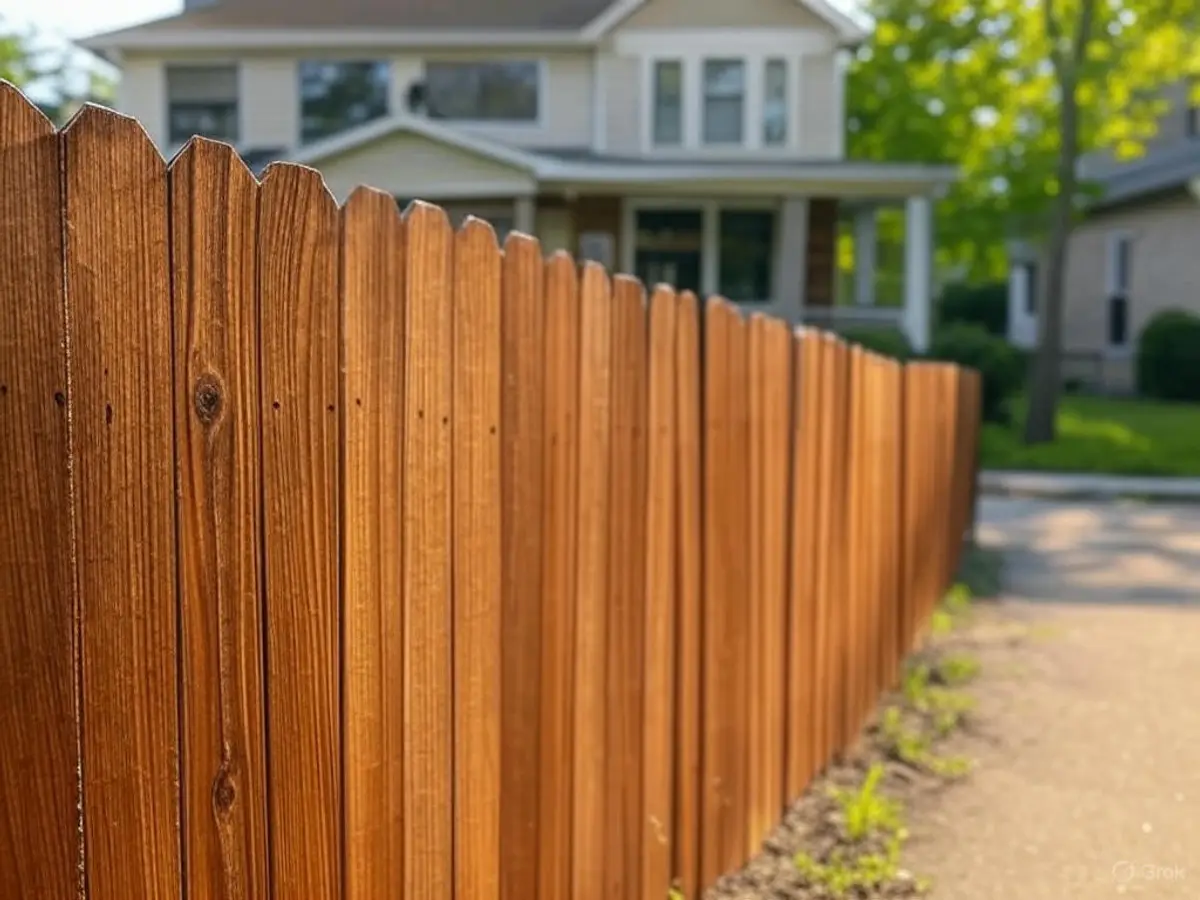
Stain that soaks in keeps water out of the grain. Water in the grain is what causes the splitting, cupping and rot that ends a deck early.
Stain shows every stop and start. Working board to board, wet edge maintained, is the difference between an even deck and a striped one.
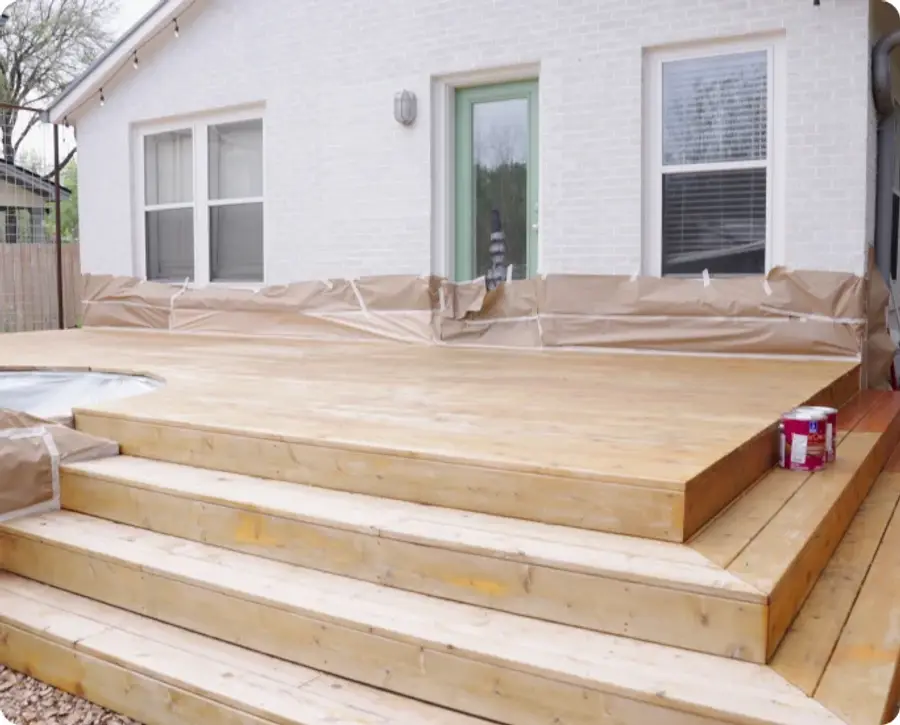
Plants covered, siding masked, furniture back. We tell you exactly how long to stay off it before you put the table back out.
What we stain
Horizontal surfaces take the weather hardest, so they get the most attention and the most product.
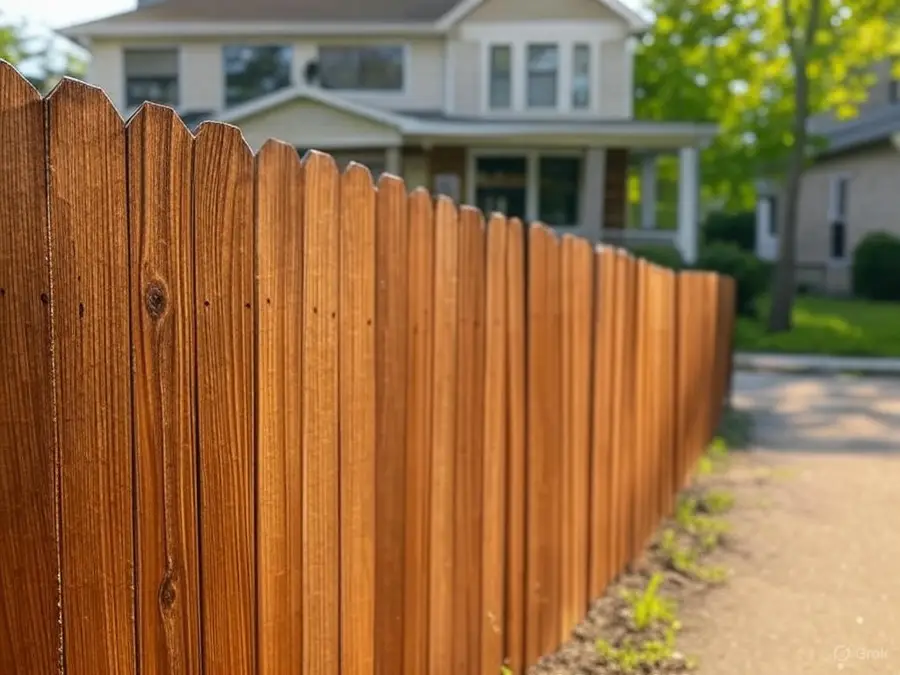
Both faces where we can reach them. A fence stained on one side only weathers unevenly and cups toward the untreated face.
The surface taking sun, snow and foot traffic. It wears faster than anything vertical and is usually the reason you called.
Slow, fiddly, and the part people actually touch. Priced honestly rather than folded into a square-foot rate.
Overhead work, so it needs staging and careful masking of whatever is underneath.
Horizontal, covered, and often previously painted rather than stained, which changes what can go on next.
End grain at the post tops drinks water first. Sealing those ends is a small job that adds years.
The finished feeling
The work behind the finish
Wash off dirt, mildew and graying, or strip failing coating back. A wood brightener afterwards evens the color before any stain goes near it.
Two to three dry days, longer after rain. Stain applied to damp wood cannot penetrate, which is the most common reason a deck fails within a year.
Splinters sanded, popped fasteners reset, and rotten boards replaced rather than coated. We show you anything soft before we swap it.
Board to board, full length, no stopping mid-run. Then we tell you how long to stay off it, which is longer than most people expect.
Right product. Right surface.
Whether a stain soaks in or sits on the surface depends on the species and on what was put on it last.
A fence or a deck is the part of the property that takes the worst of a Chicago year. Full sun in July, standing snow in February, and the freeze and thaw cycle working water into every split and fastener hole in between.
Stain is what keeps the water out of the grain, and that only works if it soaks in. Which is why most of this job is not staining at all. It is getting the wood into a state where the stain can penetrate: washing off the gray and mildew, brightening the color back, stripping any old coating that has started to fail, and then waiting for it to dry. Stain over damp wood sits on the surface and lifts within a season, and it is the single most common reason a deck that was done last year already looks tired.
The other half is knowing what is already on there. Oil will not cure over an old acrylic. New pressure-treated lumber is too wet to absorb anything. A porch floor somebody painted a decade ago cannot go back to stain without a full strip. We test a patch and tell you which of those you have before quoting, because it changes both the work and the price.
Then it is board to board with a wet edge maintained, no stopping mid-run, and an honest answer about how long to stay off it before the furniture goes back.
Cedar is soft and full of natural oils. A film-forming coating traps moisture behind it and peels; a penetrating stain lets it breathe.
New pressure-treated lumber is wet from the treatment. Stain it too early and it will not absorb, which is why so many new decks look blotchy.
Redwood holds color well but grays fast in direct sun without pigment to block UV.
Oil over old acrylic will not cure. Knowing what is already on there decides what can go on next, so we test a patch first.
Once a horizontal surface has been painted, stain is no longer an option. It has to stay a film, so it needs one built to be walked on.
Know what to expect
Staining is quoted on site because the price turns on the condition of the wood and whether the old coating has to come off, not on square footage alone.
The surfaces you want finished, access, dimensions, and the details to include.
Existing paint, repairs, bare wood, and any areas that need extra attention.
A coating plan suited to the material, with the scope and price confirmed before work begins.
Let's clear things up
When wood is dry enough, how long you stay off it, and what we do about plantings.
Stain, almost always. Paint on a horizontal walking surface traps moisture under a film and peels, and once a deck has been painted you cannot go back to stain without stripping it completely. Vertical fences have more latitude.
Two to four years for a horizontal deck in this climate, longer for a fence. South-facing boards and stair treads go first. Recoating on time is far far less than stripping a failed finish later.
If it is pressure-treated, usually not yet. New treated lumber is still wet from the treatment and will not absorb stain evenly. We test with a water drop: if it beads, it is not ready.
Wherever we can reach. A fence coated on one side only weathers unevenly and tends to cup toward the untreated face. If a neighbor's planting blocks access we will tell you at the quote rather than after.
At low pressure. High pressure tears the soft summer growth out of cedar and pine and leaves a furred surface that drinks stain unevenly. Cleaner and a brush does more good than pressure does.
Usually a day for foot traffic and two to three before furniture and planters go back. Humidity extends it. We give you the actual number at handover rather than a guess.
Going darker is straightforward. Going lighter means stripping the old stain first, which is a bigger job and priced as one. We will always tell you which of the two you are asking for.
Local homes. Local painters.
A fresh start, with Bold Coat
Tell us what you have in mind. We will help you put a plan together.