A sprayed finish, not a brushed one
Doors and drawer fronts come off and get sprayed flat. That is the difference between cabinets that look refinished and cabinets that look painted.
A kitchen that feels new again
Cabinet painting and refinishing for Chicago and suburban kitchens. A sprayed, factory-smooth finish on the boxes you already have, for a fraction of replacing them.
Doors sprayed off site. Your kitchen back in days.
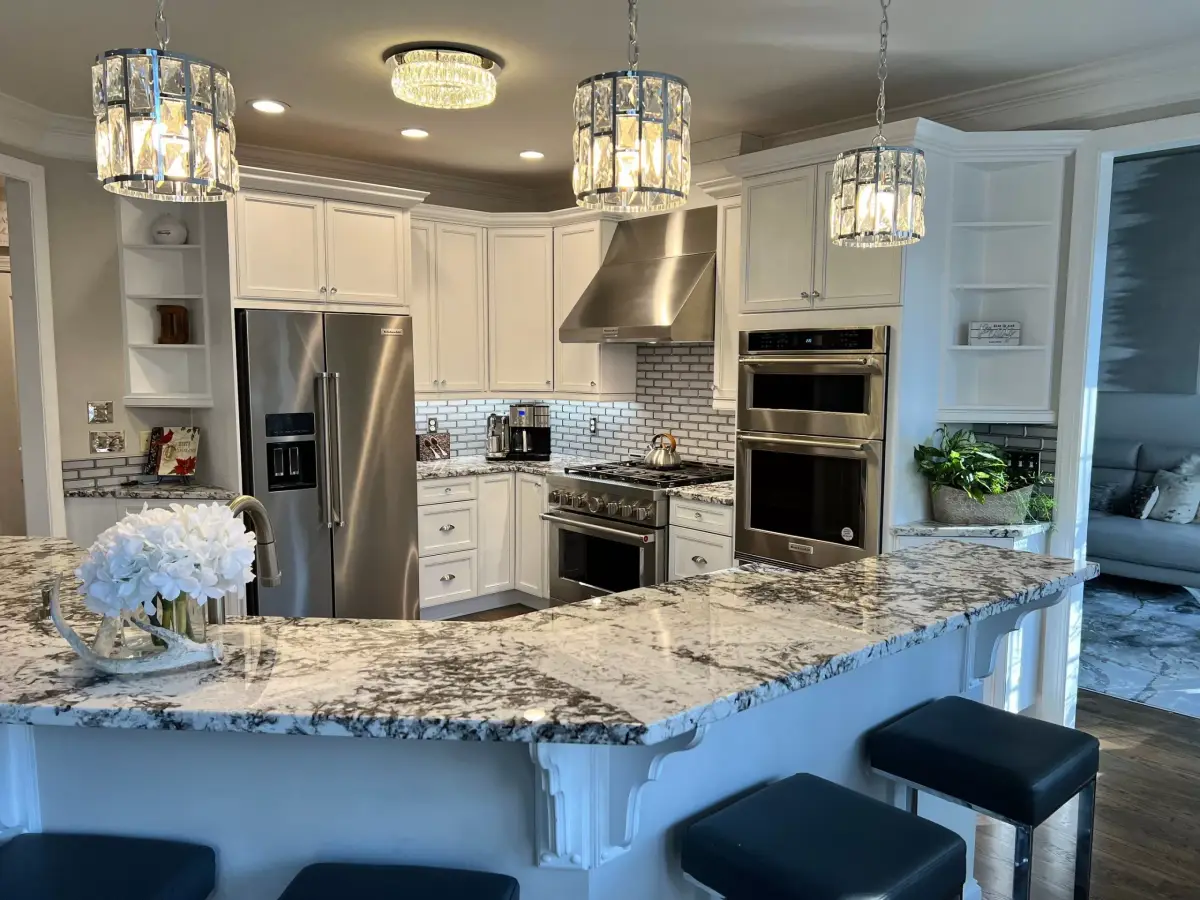
Doors and drawer fronts come off and get sprayed flat. That is the difference between cabinets that look refinished and cabinets that look painted.
If the boxes are sound, refinishing changes the whole kitchen for a small share of what new cabinetry costs, and it takes days rather than weeks.
Boxes are coated in place while the doors cure off site. You lose the doors for a few days, not the room.
What we refinish
Cabinets come apart, get cleaned and sanded, and go back with a finish that survives daily use.
Doors, drawer fronts, boxes and end panels. The full kitchen, treated as one surface so the color reads consistently.
Small enough to turn around fast, and the surface most likely to be sitting in steam every morning.
A darker island against lighter perimeter cabinets is the least expensive way to make a refinish look designed rather than repainted.
Same process as cabinetry, usually coated in place, and it ties joinery into the trim color in the rest of the room.
Hard-wearing rooms where the finish matters more than the color. These get the same enamel as a kitchen.
Usually included with the kitchen at little extra cost, and awkward to match later if they are left out.
The finished feeling
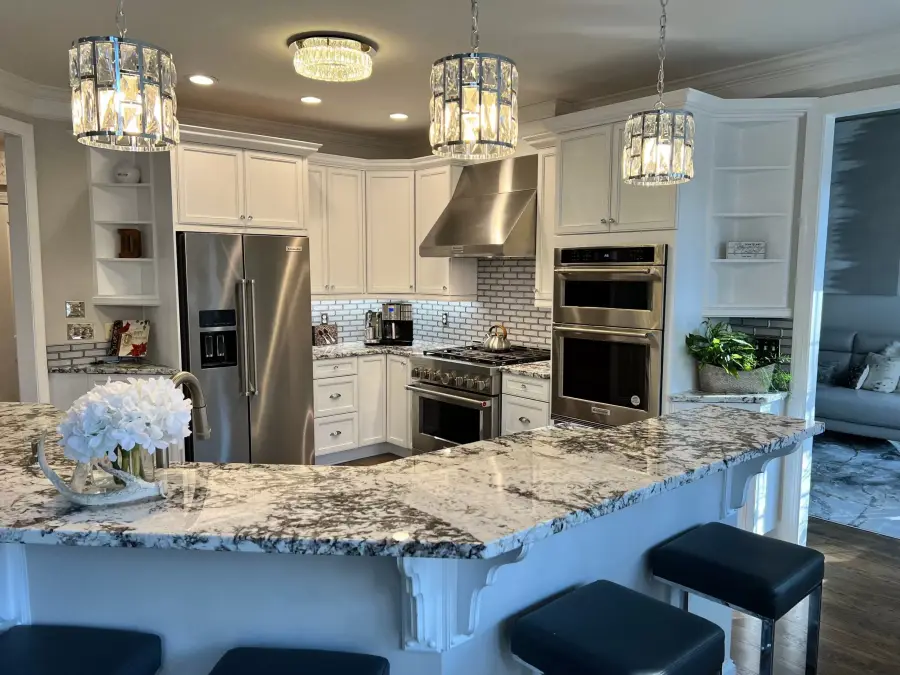
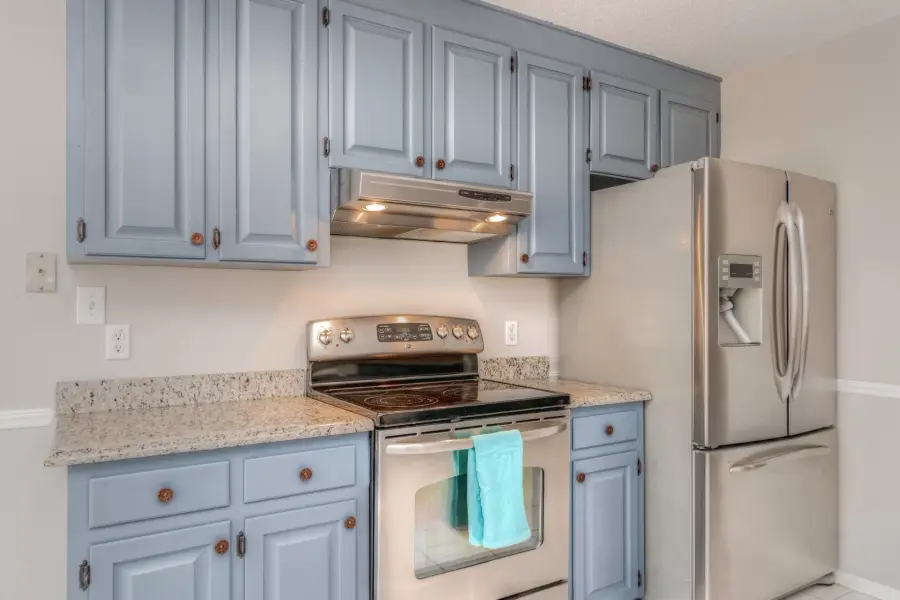
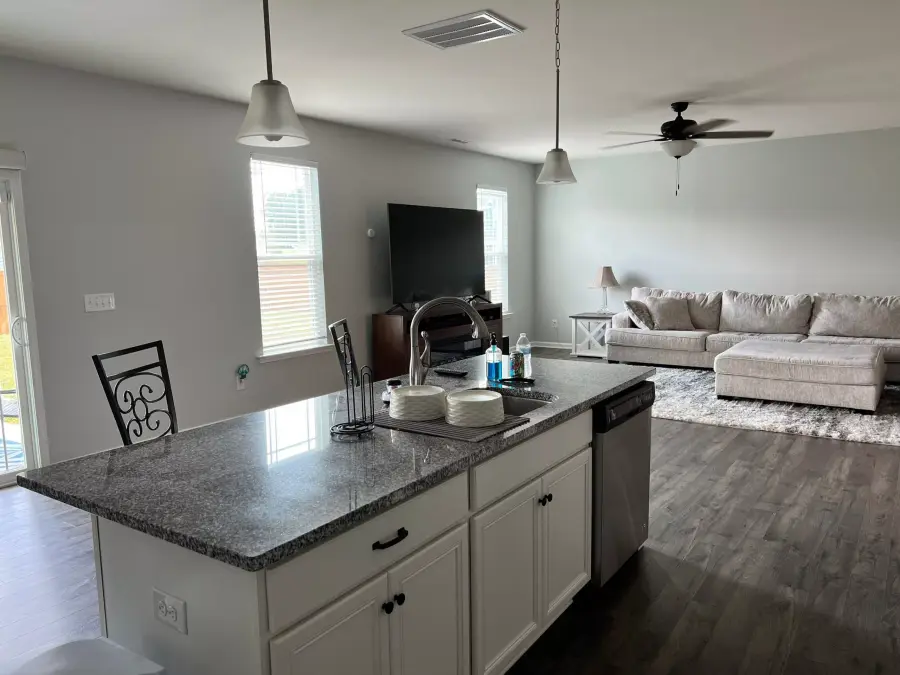
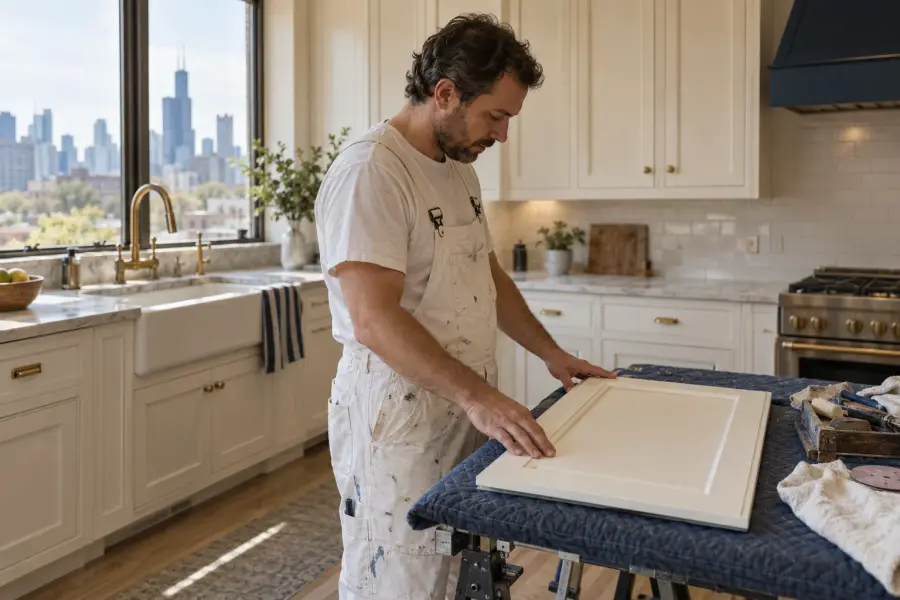
The work behind the finish
Floors, counters, backsplash and appliances covered, walls and ceilings masked. Doors, drawers and hardware come off and get labeled.
Kitchen cabinets carry years of cooking grease. Degreasing and deglossing is the step that decides whether the primer bonds at all.
A bonding primer suited to the substrate, sanded smooth before color. This is where a sprayed finish gets its flatness.
Doors and fronts sprayed on both faces and left to cure, boxes coated in place, then everything refitted and walked through with you.
Right product. Right surface.
Almost every cabinet problem we get called to fix is an adhesion problem. What the doors are made of decides which primer prevents it.
About half the cabinet jobs we get asked to quote are repairs of somebody else’s. Brush marks in the finish, tannin bleeding through in patches, paint bridging the hinges so the doors no longer sit square. Those homeowners end up paying twice.
Cabinets are unforgiving in a way walls are not. They sit at eye level in the brightest room in the house, they get touched a hundred times a day, and they carry years of cooking grease that ordinary cleaning does not shift. Paint that was not given a surface to grip does not fail subtly, it fails at the handle edges within months.
So the process is fixed and it does not get shortcut. Mask the room, take the doors and hardware off and label them, degrease and degloss every surface, sand, then a bonding primer matched to what the doors are actually made of. Oak, MDF and thermofoil each need a different one, and using the wrong one on thermofoil is the single most common reason a cabinet finish peels. Then color, sprayed on both faces, cured properly, and everything rebuilt and walked through with you.
The result should not read as painted cabinets. It should read as cabinets.
Oak grain telegraphs through paint. Filling is optional, but you should be choosing that rather than discovering it.
Nothing ordinary sticks to thermofoil. The wrong primer here peels off in sheets within a year, and it is the most common failure we are called to.
MDF drinks coating at the cut edges and swells wherever water has got in. Sealing those edges first is what stops a furry finish.
If the last finish is sound we can go over it. If it is peeling, it comes off first, because a new coat will not fix adhesion underneath it.
Painted-over hinges are the clearest sign of a rushed job, and they stop the doors closing squarely afterwards.
Know what to expect
Cabinet work is priced by door and drawer count rather than by room, so the estimator asks for those rather than square footage.
Added to a room we are already painting.
Let's clear things up
How long the kitchen is out of use, what happens to the hardware, and why the finish holds.
You keep the kitchen. The boxes are coated in place and the doors are sprayed and cured off the job, so you lose the doors for a few days rather than the room. Most kitchens run three to five working days.
On oak, yes, unless we fill it. Grain filling is extra work and it is your call, but it should be a decision made at the quote, not a surprise at the end. On maple, MDF and thermofoil the finish comes up flat either way.
Yes, with the right bonding primer. This is the substrate that goes wrong most often, because ordinary primer does not adhere to it and peels off in sheets. It is worth asking any painter which primer they plan to use.
Sprayed. Doors and drawer fronts come off and are sprayed flat, which is what produces the hard, even finish. Boxes and face frames are done in place with a fine finish, masked back to the wall.
We use a cabinet-grade enamel that cures hard rather than an ordinary wall paint. It takes a few weeks to reach full hardness, so we ask you to be gentle with the doors for the first two weeks.
We remove, label and refit what you have, and we are happy to fit new handles you supply. If the new hardware has a different hole spacing we will tell you before we start, because that means filling and redrilling.
If the boxes are solid and the layout works, refinishing gives you most of the change for a small share of the cost. If the boxes are sagging, water damaged, or you want a different layout, replacement is the honest answer and we will say so.
Local homes. Local painters.
A fresh start, with Bold Coat
Tell us what you have in mind. We will help you put a plan together.