Colors
Choosing Exterior Paint Colors for a Chicagoland Home
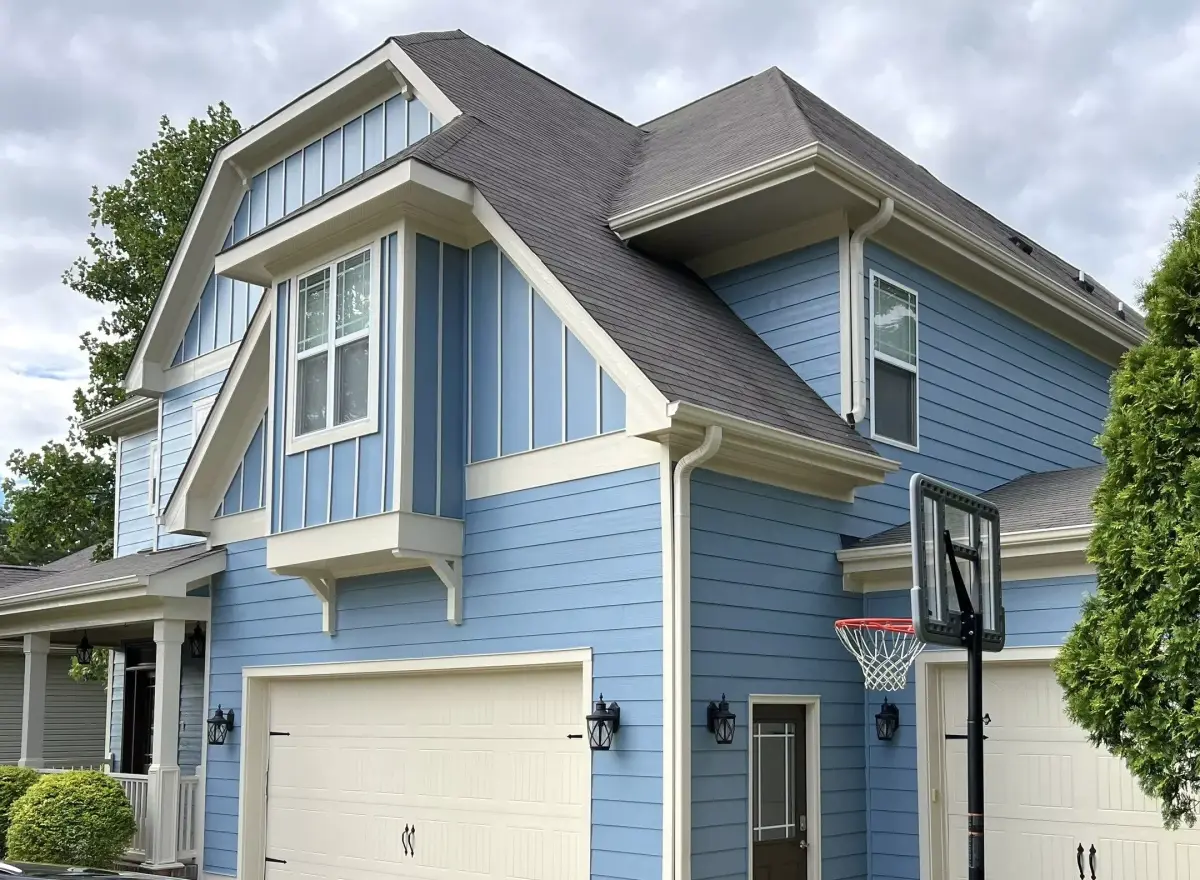
Exterior color is the decision people agonize over most and the one that matters least to how long the paint lasts. It matters a great deal to whether you like your house every time you pull into the driveway, so it is worth an hour of method rather than a week of chips.
Start from what the house is made of
Cedar, brick, stucco and Hardie each carry color differently, and the material you are not painting sets the palette for the material you are.
Brick. If the brick stays bare, it is the dominant color of the house and everything else has to sit beside it. Warm red and orange brick wants trim in a soft white or cream rather than a blue-white, and body colors (on a gable, a dormer, an addition) in a muted green, taupe or charcoal. Gray and buff brick opens up cooler whites and blues.
Cedar. Painted cedar takes almost any color, but the texture of shake reads darker than a chip because of the shadows between courses. Go one step lighter than you think on shake. Stained cedar is a different conversation: a semi-transparent stain shows the wood and limits you to browns, grays and a few muted greens.
Stucco. Stucco has a flat, matte surface that shows color very true, which makes it the easiest to sample and the most unforgiving of a slightly wrong undertone. Warm whites, soft ochres and pale grays are the traditional range on Tudor and Mediterranean-revival stucco in the north suburbs.
Hardie and vinyl. Factory-finished siding in newer subdivisions is usually in a manufacturer’s palette already. Repainting it opens the range, with one warning: vinyl cannot take a color darker than its original without warping in the sun, and most manufacturers publish a list of what is safe.
Chicagoland light is not showroom light
The lake side of the region gets a lot of overcast, flat light, and under it warm colors look grayer and cool colors look colder than they do in a sunny showroom. Colors that read as a pleasant greige on a chip can turn into wet cardboard on a November afternoon in Wilmette. Two rules follow.
Lean warm. A white with a touch of yellow or red in it looks white outdoors here; a pure or blue-white looks like primer. The same goes for grays: a gray with a warm undertone holds up under cloud.
Go a shade lighter than the chip for the body. Exteriors read darker than interiors because of shadow and scale, and a color that feels bold on a two-inch chip feels heavy across a whole elevation.
Test on the wall, not in the kitchen
Buy sample quarts of your final two or three and brush a two-foot square of each on the south wall and on the shadiest elevation. Look at them in the morning, at midday and at dusk, over at least two days including a cloudy one. The one you still like on the gray afternoon is the one to buy. Every other method, including holding a chip against the siding, will disappoint at least once.
If the house has bare brick, put the sample next to it. If there is a landscape element that will not change, a slate roof, a bluestone walk, a stone foundation, sample against that too.
HOA, landmark and historic districts
Some subdivisions in Glenview, Northbrook, Oak Brook and Naperville have HOA color lists, and some blocks in Winnetka, Evanston, Hinsdale and Oak Park sit in or near landmark districts with review rules. Neither is a reason to avoid color; both are a reason to find out before you buy paint. An HOA list is usually a set of approved manufacturer colors and is easy to work inside. A landmark review is usually about keeping to the period range for the house and is worth a conversation with the village before the sample stage. We ask about both at the walkthrough so the color is settled before the scope is written.
The door
The front door is where the accent goes, and it is the one place a bold choice costs almost nothing to change later. Deep green, navy, black, oxblood and a clear yellow all work on the classic body colors above. Paint it in a satin or semi-gloss enamel so it takes fingerprints and weather, and give it the most careful prep on the house, because it is the surface people stand two feet from.
When the palette is settled, the rest of the job is prep and weather, which is where the cost and the lifespan actually come from. Our exterior painting page covers that, and the projects pages show the colors we have put on real Chicagoland homes.
FAQs
Does dark exterior paint fade faster?
Dark colors absorb more heat, which stresses the film and the wood under it, and they show chalking sooner. On a south or west wall a deep color can look tired a few years before a mid-tone would. Modern exterior acrylics with UV-resistant pigments narrow the gap; they do not close it.
How many colors should an exterior have?
Three is the usual answer: a body color, a trim color, and an accent for the front door and shutters. A fourth for a porch ceiling or a garage door is common. More than that and the house starts to look like a sample card.
Should I paint the brick?
Only if you are sure. Painted brick cannot go back without damage, and it needs a breathable masonry coating or it traps moisture and spalls. Unpainted brick with fresh trim and a strong door color is often the better outcome.